Dots, sunspots, and skin pigmentation are the aspects that may influence skin evenness, even though you have good skin. For people who were unable to cope with hyperpigmentation with the help of any topical skincare products, it could be worth considering whether it is suitable for them to apply a chemical peel.
Indeed, in the case of a chemical peel, the exfoliating approach will be used to peel off the old skin cells and replace them with new ones.
However, it is necessary to understand that chemical peels cannot deal with all issues at once. There are different peels to choose from and factors that can affect how effective a peel is when trying to treat hyperpigmentation.
Quick Answer
The hyperpigmentation chemical peel treatment will help to improve the skin condition through the removal of dead skin layers responsible for skin discoloration and also promote regeneration.
The number of treatments required depends on many factors, including the severity of hyperpigmentation, skin type, peel selected and skin reaction. Some people get a more even complexion after one session, others will need several sessions depending on their skin.
As some forms of pigmentation might get worse because of skin irritation or exposure to the sunlight, professional evaluation and after care are essential.
Table of Contents
- What Is Hyperpigmentation?
- Common Types of Hyperpigmentation
- How Does a Chemical Peel Work?
- Which Chemical Peel Is Best for Dark Spots?
- How to Prepare for a Chemical Peel
- What Happens During the Treatment?
- Chemical Peel Recovery and Aftercare
- When Will You See Results?
- How Many Chemical Peels Do You Need?
- Chemical Peel vs. Microneedling
- What Results Can You Expect?
- How Much Does a Chemical Peel Cost in Tucson?
- Why Choose Personal Touch Aesthetics?
- Frequently Asked Questions
- Final Thoughts
What Is Hyperpigmentation?
Hyperpigmentation is caused by increased production of melanin in some areas of the skin compared to the rest of the skin.
The consequences are dark spots or uneven skin.
There are a few reasons for developing hyperpigmentation including:
- Sun exposure
- Acne or skin irritation in the past
- Hormonal changes
- Skin irritation
- Aging
- Certain medications or skin conditions
The cause of pigmentation matters because different types may respond differently to treatment.
Common Types of Hyperpigmentation
Post-Inflammatory Hyperpigmentation
Post inflammatory hyperpigmentation, which is also referred to as PIH, can result from acne, irritation, cuts or any form of inflammation. There will be brown or darker spots left behind once the problem subsides.
A chemical peel might be recommended as one of the treatments that would help make the spots less noticeable.
Sun Spots
This can cause discoloration in the form of spots and irregular skin pigmentation.
In any case, it should be noted that hyperpigmentation can be expected to appear in the areas of the body that are constantly exposed to the sun.
Melasma
Melasma comes as brown or gray-brown patches. It could appear on cheeks, forehead, nose, or lips.
Unlike treating a spot, melasma could be trickier because there are multiple things that affect melasma including hormones, sunlight, heat, etc. While chemical peel could be used for melasma, every individual case should be treated individually.
How Does a Chemical Peel Work?
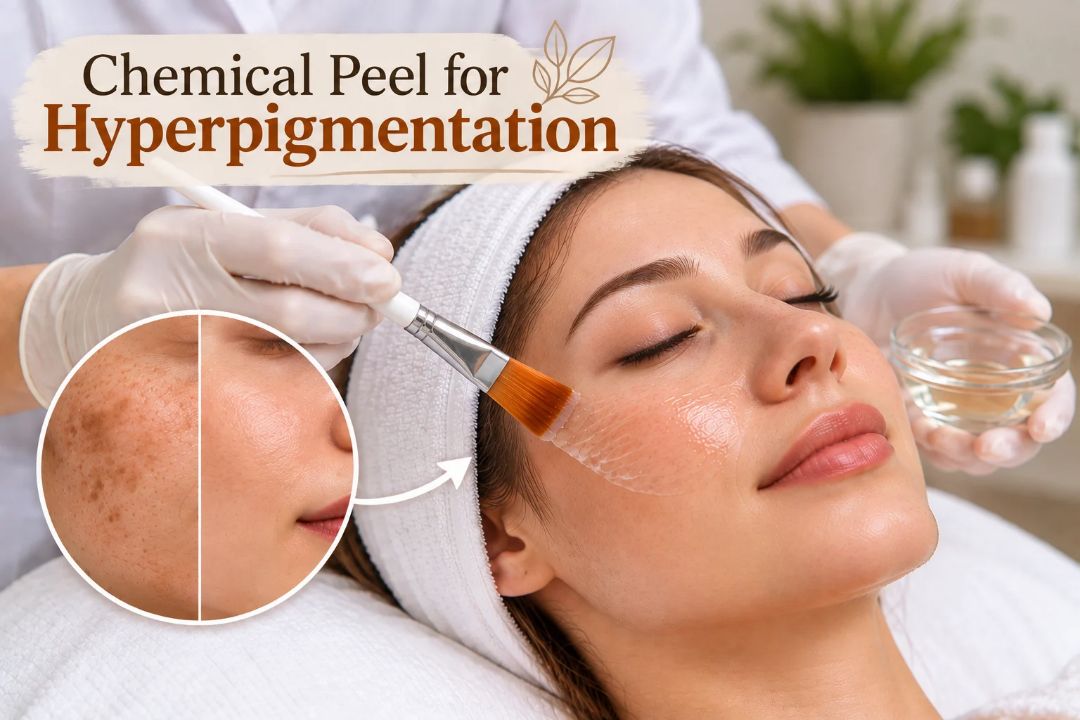
Chemical peels involve the application of a carefully chosen solution to the skin to get rid of the damaged outer cells of the skin.
- With the removal of these cells, new skin is revealed. This can be helpful for:
- Irregular skin tone
- Discoloration
- Post-acne scarring
- Pigmentation caused by sun exposure
- Dull skin
- Rough skin texture
- Some fine lines
The peel strength varies and based on the type of skin, sensitivity of skin, skin pigmentation, previous treatments and various other factors, the expert decides the right technique for the skin peel treatment process.
Which Chemical Peel Is Best for Dark Spots?
Each different chemical peel formulation will consist of such acids like glycolic acid, lactic acid, salicylic acid, and peeling agent as well. But you should choose the most appropriate one depending on your skin state and pigmentation type.
- Your skin tone
- Skin sensitivity
- Type of pigmentation
- Severity of discoloration
- History of acne or irritation
- Previous chemical peels
- Current skincare products
- Your expected downtime
- Your treatment goals
In case of pigmentation issues, it is necessary to choose the appropriate concentration of the peel because the application of the aggressive one could irritate your skin and lead to discoloration.
Who Is a Good Candidate for a Chemical Peel?
You may be a good candidate if you are concerned about:
- Dark spots
- Post-acne marks
- Uneven skin tone
- Sun-related discoloration
- Dull or rough skin
- Mild skin texture concerns
A consultation is the only right step that can help you to find out if a chemical peel is the right choice of treatment for your pigmentation problem.
You have to delay your treatment in case your skin is irritated or burnt by the sun since it requires some preparation before the peeling procedure.
How to Prepare for a Chemical Peel
Preparation is an important step not only in terms of your comfort but also for the recovery process.
Depending on the type of the treatment, you might be recommended to stop using certain products before the procedure starts.
These are general pre-treatment recommendations:
- Not getting too much sun
- Regular application of sunblock
- Temporarily stopping certain exfoliating products
- Avoiding harsh scrubs
- Avoiding waxing or other irritating treatments close to your appointment
- Arriving with clean skin and little or no makeup
Your provider may give you specific instructions based on the peel selected for your skin.
What Happens During the Treatment?
Prior to your treatment, your skin will be cleaned and prepped.
Your chosen solution will then be applied to your face. Tingling and warmth are common sensations experienced during this process and are dependent on the type and strength of the peel applied.
Your provider will monitor your skin throughout the procedure.
After the treatment, you may notice temporary:
- Redness
- Tightness
- Warmth
- Dryness
- Sensitivity
Peels vary in the degree of peeling that they cause.
There may be very little peeling or none at all. Absence of peeling does not mean that the peel was ineffective.
Chemical Peel Recovery and Aftercare
Aftercare is a very important stage of the treatment of pigmentation.
Since your skin will be very sensitive after the procedure, it is recommended to avoid picking at, rubbing or trying to peel the flaky skin manually.
Possible steps you may have to follow after treatment are:
Be Gentle With Your Skin
Apply gentle cleansers and moisturizers according to the prescription of your doctor.
Avoid any products which contain exfoliating ingredients, cleansing brushes and other irritating products before your skin will heal up.
Give Your Skin a Chance to Recover
If you notice peeling and flaking of your skin, let it happen.
Do not scratch and rub your skin. It means that in such a way you can irritate your skin more and make it impossible to recover.
Follow Your Individual Instructions
Your practitioner may provide you with some individual recommendations concerning the time when you should begin applying your skincare regimen, which involves retinoids or exfoliating acids.
Don’t be too eager to return to your ordinary skincare regimen when your skin looks fine.
When Will You See Results?
Results from chemical peel will come as your skin undergoes the process of healing and regeneration.
A typical timeline would go as follows:
Right after procedure:
Your skin may have a reddish or tight appearance due to irritation.
First few days:
Dryness, flaking, or peeling may occur according to the type of peel.
During the first week:
With your skin surface continuing to shed and heal, the skin may start appearing smoother and fresher.
How Many Chemical Peels Do You Need?
One procedure may lead to visible changes in brightness and skin texture, however, in cases of stubborn hyperpigmentation, a single procedure may not be enough.
The amount of treatments will depend on:
- The type of pigmentation
- How long you have had it
- The depth of discoloration
- Your skin’s response to treatment
- The peel selected
Instead of fixing the number of appointments, your practitioner can examine your skin condition and adjust treatment if required.
A treatment series is usually used when a gradual improvement is desired rather than one more intensive peel.a
Chemical Peel vs. Microneedling for Hyperpigmentation
Both procedures can help with some skin conditions, but they have their own peculiarities.
Chemical Peel
During the chemical peel the topical solution is applied on the skin that improves skin exfoliation and its appearance.
The technique might suit you in case your issue is related to skin discoloration and uneven skin pigmentation.
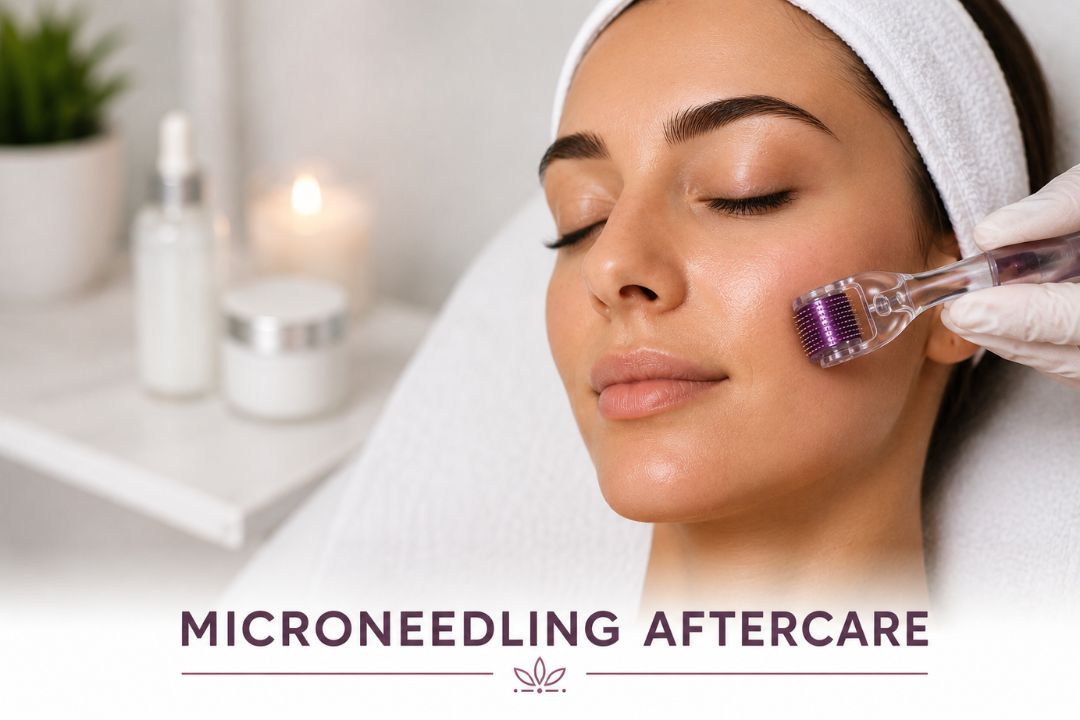
Microneedling
Microneedling is when holes are made into your skin by using very fine needles.
Which One Is Better?
There is no ideal treatment.
It depends on what you want to solve and your skin type, pigmentation and other factors.
What Results Can You Expect?
The purpose of chemical peel treatment for hyperpigmentation is always improvement, not immediate removal of all spots.
You may notice:
- A more even-looking skin tone
- Brighter-looking skin
- Less noticeable dark spots
- Improved skin texture
- A smoother overall complexion
Each person may have different results.
If the causes of the pigmentation problem are not taken care of, particularly sun exposure, pigmentation might occur again or even worse.
This is why chemical peels are most effective if applied with other treatments rather than being applied alone.
Before & After: What to Look For
If you are interested in using chemical peels on yourself, you may look at before and after pictures to know what results you might get from it.
While comparing images, note the following characteristics:
- Similar lighting
- Similar camera angle
- Similar facial expression
- Similar makeup conditions
- Enough time between treatment and after photo
Remember that everyone is different, and individual results may vary.
How Much Does a Chemical Peel Cost in Tucson?
Tucson’s cost of chemical peeling will depend on the kind of chemical peel treatment used, the location of the treatment and the sessions needed for it along with other treatments that you might require for your particular skin type.
Hyperpigmentation requires a personalized treatment method, and hence it would be better to assess the treatment on the basis of your skin requirements and not just on its cost.
You can discuss all these details during the consultation phase.
Why Choose Personal Touch Aesthetic for a Chemical Peel in Tucson?
When treating pigmentation issues, the aim should be much more than skin exfoliation.
At Personal Touch Aesthetic in Tucson, the treatments can be designed according to your particular needs and objectives.
These include:
- Your current skin condition
- Type of pigmentation
- Skin sensitivity
- Previous skincare treatments
- Desired results
- Appropriate recovery time
- Long-term skincare habits
In case you are considering the option of having a chemical peel in Tucson, AZ for the treatment of your pigmentation problem, then you can have a consultation session with our clinic.
Do you want to know if chemical peel is for you? Contact us at Personal Touch Aesthetic and book an appointment with us.
Frequently Asked Questions
When will my dark spots fade after chemical peel treatment?
There might be some improvement in the overall tone of your skin and evenness due to healing, but the spots can require several sessions to fade. It depends on the type of the pigment and your reaction to it.
Will I experience peeling after a chemical peel procedure?
It is possible, but not all peels cause peeling skin. Some cause very little, depending on the chosen treatment and the way your skin reacts to it.
Can I use makeup after a chemical peel?
Yes, although based on what your provider tells you, you may have to wait before doing it.
Is a chemical peel effective against acne scars and dark spots?
Yes, it can help in some cases of post-acne marks. Nonetheless, since pigmentation and acne scars are two different things, the best course of action will depend on what you wish to correct.
Is a chemical peel effective for melasma?
A chemical peel can be used as part of the procedure for treating melasma; however, considering how recalcitrant this condition could be, you may need multiple sessions of it.
How frequently should I get a chemical peel?
It would depend on the kind of peel that you use, the recovery of your skin, and what you want to accomplish with the procedure. It shouldn’t just depend on the interval that everyone uses.
Will it hurt?
There might be temporary tingling, warming, or burning sensations when getting certain chemical peels.
Final Thoughts
Unfortunately, it is very irritating that the discolored areas are not going away even after adopting a steady skincare regimen.
For instance, in case of skin discolored problems, hyperpigmentation caused by sun exposure and post-acne scars, a chemical peel for hyperpigmentation is perfect. Nevertheless, the effect of chemical peels depends on the choice of the right kind of peel for your skin.
Good assessment, preparation, and proper care will ensure that your result will be perfect.
Do you live in Tucson? Do you think that chemical peels will work for you? Let Personal Touch Aesthetic prepare a program according to your skin and its needs.
Is it time to improve the look of the dark spots and skin tone issues? Call Personal Touch Aesthetic for a consultation.